September 15, 2022
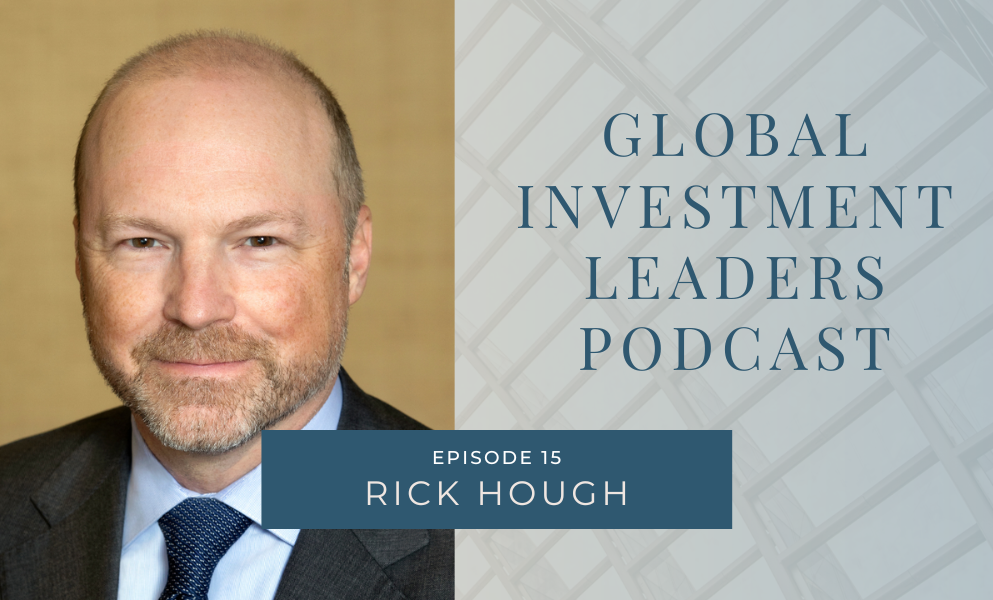
In this episode of the Global Investment Leaders podcast, Rosemont CEO Chas Burkhart is joined by Rick Hough, CEO of Silvercrest Asset Management Group, a leading US wealth management firm with approximately $29 billion in assets under management.* Founded in 2002, Silvercrest provides traditional and alternative investment advisory and family office services to wealthy families, institutional investors and endowments.
Prior to becoming CEO, Hough worked closely with Silvercrest Founder Moffett Cochran to build the business and execute the firm’s strategy, with roles as president and chief operating officer. Cochran’s goal from the beginning was to create a publicly traded company, and Hough has executed that vision capably throughout his tenure. During their conversation, Hough and Burkhart discuss Silvercrest’s evolution and defining characteristics, the benefits and challenges publicly traded wealth management firms face, and Hough’s thoughts on Silvercrest’s future.
Listen to learn more about:
- Hough’s unique background in the nonprofit world and what led him to Silvercrest
- Silvercrest’s hybrid architecture and the investment engine driving returns for clients
- How Silvercrest delivers institutional quality investment skills, a conflict-free model and exemplary client service in an increasingly crowded and competitive landscape
- Why Silvercrest became – and remains – one of the few publicly traded wealth management firms
- Hough’s leadership orientation and how he spends his day as CEO at Silvercrest
When it comes to Silvercrest’s near- and long-term aspirations, Hough balances innovation with remaining focused on protecting the generations of capital with which the firm is entrusted. “Being conservative with capital does not mean you’re unable to innovate…and there are a number of ways you can innovate on behalf of clients.” Hough cites technology as an important focus that is improving and deepening client relationships.
All episodes of the Global Investment Leaders podcast are available on Apple Podcasts, Spotify, Google Podcasts and more. Receive the episodes as soon as they premiere by subscribing today.
*Silvercrest Asset Management Group’s AUM at time of recording
August 11, 2022
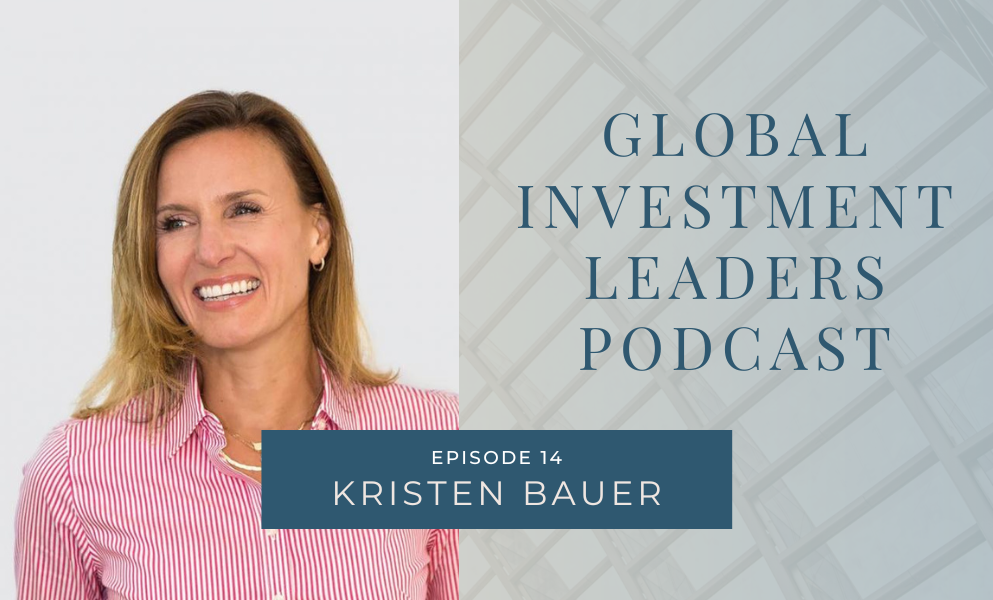
In this episode of the Global Investment Leaders podcast, Rosemont CEO Chas Burkhart is joined by Kristen Bauer, CEO of Laird Norton Wealth Management, an independent Seattle-based wealth management firm. Founded in 1967 as a single-family office, Laird Norton now manages approximately $15 billion in assets* for nearly 1,500 prominent families, individuals, foundations and endowments.
A CPA with more than 20 years of experience in holistic wealth management, Kristen originally started her career as a trusted advisor and CFO for George Russell and his family. Prior to joining Laird Norton, she went on to become president at Threshold Group, helping transition that single-family office into a multi-client office, developing and leading the national family office practice and ultimately merging the company into Tiedemann Advisors.
During their conversation, Bauer and Burkhart discuss:
- Bauer’s tenure as CEO of Laird Norton, which started just weeks before the Covid-19 pandemic began making headlines, and the workplace changes she has navigated in the years since
- Laird Norton’s unique position as a registered investment advisor and a trust company and how that structure better enables the firm to partner with clients for multiple generations
- How the client experience is the first consideration when it comes to inorganic growth, with employees, clients and the community as key stakeholders in M&A decision making
- Laird Norton’s approach to ESG and impact – both on behalf of the clients they serve and within the four walls of their company
- The ownership of Laird Norton and the recent introduction of employee equity to ensure the sustainability of the firm for years to come
Regarding the future of Laird Norton, Bauer tells Burkhart that she is focused on the long-term. “We’re feeling like we are in the J-curve of an investment and we are really thinking about what the next 10 years look like – not what the next year looks like,” Bauer says “When you look at it from that approach, decisions become a little bit easier in the organization.”
All episodes of the Global Investment Leaders podcast are available on Apple Podcasts, Spotify, Google Podcasts and more. Receive the episodes as soon as they premiere by subscribing today.
* Approximate AUM for Laird Norton Wealth Management at time of recording
August 10, 2022
That’s the question we get in almost every single meeting. Investment firms are struggling to find the right policy, and they want to know if their peers have found the answer. The answer is simple… no, they haven’t.
Nearly everyone agrees the “old days” of five mandatory days in the office are unlikely to return. No doubt some will try—even acknowledging there may be fallout from such an approach—but they will be a small minority and may find the fallout greater than anticipated. An illustrative comment we heard recently: “If he drags us back five days a week, I’ll leave.”
On the other hand, nearly everyone also agrees some element of in-person is necessary— for so many reasons— and most firms are thus experimenting with all types of hybrid environments. “And it’s working!” they say, optimistically, before explaining why it’s not. Usually, the regrets are related to not knowing who’s in and when, or people missing important information because they weren’t in the office and the conversation happened after the team’s Zoom call ended.
We’ve learned a few important lessons through these conversations, and can share a few key takeaways:
Listen to your people. Whether through conversations, surveys or other means, find out what is important to the individuals on your team. People may value the ability to work from home because they avoid a long commute, or because they actually get more done without interruptions all day. Or they have childcare issues, or perhaps hate their coworker. Alternatively, maybe they like coming in but see no point if others aren’t there. And if they are to come in, they might have some suggestions on office space given new working norms.
The emotions and reasons may or may not be valid. But asking the questions and getting the information can allow you to make informed policy decisions. And listening to their concerns will win loyalty and effort.
Set a policy and communicate expectations. It doesn’t have to be perfect right away; it’s okay to try a policy for a while and then adjust as you try to find the right balance. Not everyone will be happy—you’ll never be able to please everyone—but it can be created collaboratively and should be communicated clearly so everyone knows what’s expected of them. Everyone’s got to row in the same direction to get anywhere.
Be flexible. Whatever policy you’re leaning toward, make sure it offers flexibility. The most valuable real estate for employees is the space between their work life and their personal life. Being flexible here will come back in spades; being rigid will chase people away. That may mean certain fixed days in the office to ensure overlap and/or coverage, with a flex day or two each week. It may mean asking people to be in the office five days if they can but being accommodating of work from home when needed (in their judgment, not yours). Some companies have decided to give each employee a certain number of WFH flex days each quarter to use as they wish.
Remind people that the health of the company is key, and that the people are the company. Teammates should look out for one another, be compassionate and supportive, hold each other accountable, and recognize it’s about the team, not any one person. Young employees need mentoring, socialization and the osmosis effect. More experienced employees should understand they have a role in helping younger folks along and might need to be in the office a bit more to help with development and culture. And everyone needs to do their work, and well. If those second-order needs are met, being prescriptive about policy is less important.
Define success, thoughtfully. What really matters, both now and over time? For some emperor types, simply seeing their people in their chairs all day every day might be “success.” But much of the corporate world has evolved. A reasonable objective for a remote work policy might be one that achieves high retention and productivity… are we keeping our best people and putting them in a position to do their best work? Those are signs of a high-performing culture, not a bad north star for policy decisions.
I expect the pendulum, which has swung heavily toward workers in the last few years, to swing back toward employers. We’ve heard a few anecdotes recently, such as a manager telling his team they’d need to return to the office four days a week and being told they’d be willing to do three. In a tougher market and/or economy, workers may be less emboldened to dictate terms like that. But it is clear from everything we’ve heard, read and observed that the above principles have proven the most effective for most so far and will likely be successful approaches going forward.
Firms are starting to set policies—they have to—but they’ll no doubt evolve over the next few years as managements learn what works or doesn’t and employers and employees find equilibrium. For now, though, you’re not alone if you haven’t found the “right” answer.
Note there are additional resources you can turn to, such as the CFA Institute’s three-part series, “Where, What and How Work Gets Done: The Future of Work in Investment Management”, and PwC’s Hybrid Work Comes to Financial Services.
July 28, 2022
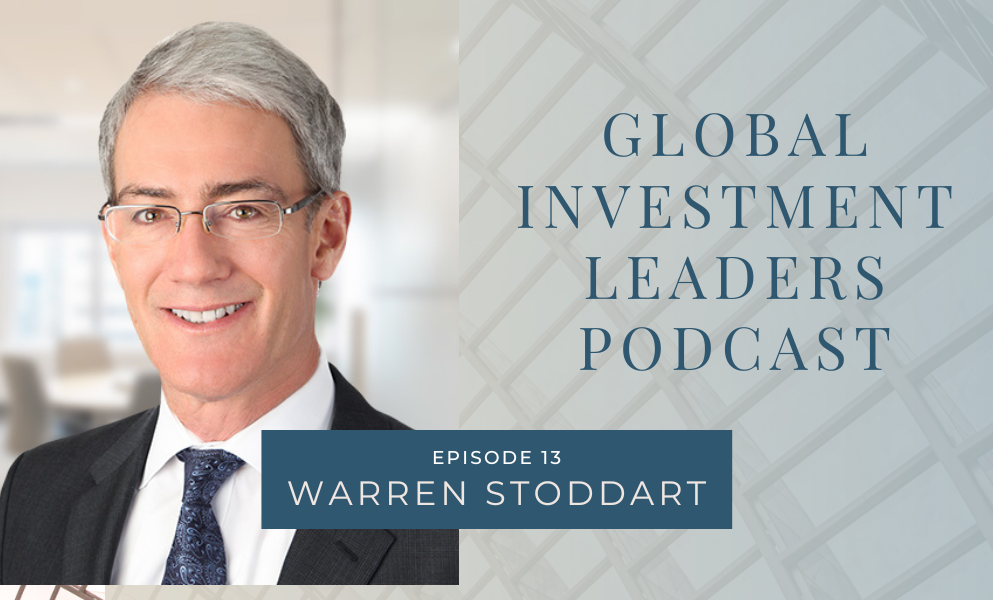
In this episode of the Global Investment Leaders podcast, Rosemont CEO Chas Burkhart is joined by Warren Stoddart, the President and Chief Executive Officer of Connor, Clark & Lunn Financial Group – one of the largest employee-owned firms in Canada. Warren has held this position for over 20 years, until 2021 as Co-Chief Executive Officer with Michael Freund, with whom he shared overall responsibility for the growth and development of the firm and its ongoing management.
Throughout their conversation, Stoddart and Burkhart discuss:
- How Connor, Clark & Lunn evolved to a $100 billion* global firm with multiple affiliates and a worldwide client base
- The affiliates that comprise Connor, Clark & Lunn, with revenue streams coming from public markets investment products, private markets, high net worth clients and returns on investments the firm makes as principal on its own balance sheet
- How Stoddart views the M&A environment and the firm’s criteria by which they judge potential acquisitions, starting with partnership potential and alignment first, before evaluating product and geography considerations
- The investment strategies Stoddart is closely watching, specifically including active specialty strategies such as international small cap and frontier markets, as investors become disenchanted with large-cap developed market public equities and fixed income
- Connor, Clark & Lunn’s ownership structure and succession planning approach that is built to ensure the success of future firm leadership as the business becomes more complex
According to Stoddart, as the firm grows, its people remain his primary focus – a key concept that has shaped the firm from the beginning. “The decision was made to organize the business around the idea that we would be successful if we got as good as we could at attracting and retaining talented individuals. Since that time, the mission of the business has been to provide for the self-actualization of the people who work within it. And we’re confident that if we do that, we’ll have a successful enterprise.”
All episodes of the Global Investment Leaders podcast are available on Apple Podcasts, Spotify, Google Podcasts and more. Receive the episodes as soon as they premiere by subscribing today.
* Approximate AUM for Connor, Clark & Lunn Financial Group at time of recording

July 25, 2022
by Chas Burkhart
There’s little debate that most participants in today’s markets are focused on the immediate future. Investment horizons in public markets seem shorter and shorter, and M&A is heavily weighted to upfront consideration. Acquisitions are lauded as successful before they even close, and it’s well documented that the majority of strategic M&A is unwound or falls short of buyer expectations. The financial press is often eager to support the cause, heaping praise on dealmakers for strategy, scale and sensational valuations without giving much thought to the future.
It’s all fine when everything is moving “up and to the right.” Rising markets are very forgiving. But what happens when markets roll over, as witnessed in the first half of this year? A short-term trade is fine when the next trade is favorable. But what happens when the future suddenly looks highly uncertain? Or something booked at a high valuation is suddenly worth less? Or an assumed growth rate used to justify a purchase price is increasingly in doubt? My experience dating back to the early 1980s tells me there’s trouble ahead – trouble that could have been avoided with prudent foresight.
The Investment Management Industry and Horizons
The investment management industry comprises countless variations and approaches to the business. Points of view on strategy and tactics vary greatly, from business models to leadership styles to compensation structures, asset allocation, service offerings, etc. There are literally hundreds of different types of investment businesses: lifestyle/boutique/enterprise; wealth management versus institutional money management; private asset-focused versus public market-focused; global client base versus U.S.-centric versus region-specific; 100% employee-owned to 0% employee-owned; 10 bps businesses to 500+ bps (including carry/performance fees); etc. It can be challenging to synthesize all these factors within a single industry.
However, there is one characteristic that runs throughout most of the industry: short-term perspective. We see 1- to 3-year standards for evaluating investment performance, compensation, acquisitions, business planning and more. Ten-year-plus measurements seem irrelevant for making decisions and judging outcomes. Who has the luxury of long-term planning? Who wants to wait around? Incentives—both in positive form such as bonuses and negative forms such as job risk—dictate quick results. So, short-termism pervades.
I’m reminded of a veteran marketing director at one of our former investments, who used to cherry-pick brief investment performance periods that were unquestionably appealing but oddly specific (e.g., look at our 1¾ -year numbers!). We all had a good laugh at the time, but unfortunately, those short-horizon and artificially bookended numbers were often unsustainably good. Conversely, we often see the reverse: good long-term results undermined by recent headwinds. Of course, who relies foremost on longer-term results and isn’t swayed by recent history? Many investment committees suffer recency bias, as do clients. That’s just how it is in a world without patience.
Transaction Activity Speaks Volumes
The phenomenon carries over to deal-making in our industry as well. Valuations paid for wealth management and alternative asset firms over the last few years have grown higher and higher, supported by low interest rates, rising markets, and the greater fool theory. A recent report on wealth management M&A cited an average EV/EBITDA multiple of more than 16x on larger transactions over the past three years (Deutsche Bank US Wealth Management Update, June 2022). While this data is somewhat selective and ignores smaller, typically lower-valued transactions—we’ve seen data suggesting the broad average is 9x—it is corroborated by our own direct observations and demonstrates the high prices buyers are willing to pay. (We also know most of that value is skewed to closing consideration, which shows the risk buyers are willing to take.) The calculus behind return expectations on many of these deals—and there are a lot of them—is remarkable; it requires aggressive compound growth in a relatively tight window. Not impossible, but not exactly likely across a category that has benefited greatly from rising markets for ten-plus years and is now off to its worst start in 50 years and facing a maelstrom of challenges.
Yet true to form, the focus is on the here and now. Sellers receive big paydays at close. Investment bankers are paid at the closing of the transaction. All newsworthy for sure, but no inkling of whether the transaction will survive or flourish.
One long-time industry colleague once said, “beware of anyone who would sell you carry.” The point could be extrapolated to the vast majority of sellers over the last few years. Most are cashing checks at high-water marks in multiples and absolute valuation. Many may have top-ticked pricing, just like the stampede of sellers in 2000—Nicholas Applegate, Bel Air, Fiduciary Trust, J.P. Morgan, Bernstein, U.S. Trust, J O Hambro, United Asset Management, etc. Can you blame them? How many winning offers have exceeded many peoples’ wildest notions of what their firms would ever be worth? If you’re cashing out, why not hit the bid? That’s great for the seller but a catch-as–catch-can for those not receiving big paydays. The better the seller does, the less potential return there is for the buyer, which—when accompanied by underperforming acquisitions—dominoes down to key employees and the next generation of leaders.
And now that 2022 has proven to be a confluence of deteriorating markets, unchecked inflation forces, ever-rising rates and a Ukraine crisis that could well amplify, the assumptions on which most of these transactions have been made are likely to be severely tested in their early years. Five percent, 10%, or even 15% revenue growth assumptions are facing big headwinds now and over the near term. Investors that have paid lofty double-digit EBITDA multiples at close and are seeking to make 20%+ IRRs and 3x+ their money over the next 5-7 years will face enormous pressure and a nearly impossible task. Contrast the frothy M&A environment with the modest single-digit multiples on the world’s largest publicly traded money management firms (7.4x EV/EBITDA in Piper Sandler’s Financial Services Investment Banking Monthly Asset & Wealth Management Report, May 2022). That’s a huge spread between publics/privates and asset/wealth management. T. Rowe Price, Invesco and AMG are all being valued at plus or minus 6x EBITDA currently. What would 6x get you in the private transaction marketplace?
Many of these acquisitions are thoughtfully strategized, but now they need time more than ever. An extended market malaise will create significant misalignment, pressure, and disruption over the short term. Over the next few years, many deals may look horrendous; over the next 10-12 years, many might prove resilient and value-creating. You could say the same thing about any firm on its own, organically driven and uninvolved in any deal-making. Extended poor or mediocre markets will drive decisions that would not have to be made in sunnier times. We would not be surprised to see transaction activity morph to reflect the changes in market conditions. A sensible expectation would be a greater focus on outcomes (usually through deal structure).
What is Success, Really?
Remember Engemann, Rittenhouse, and Brandes – darlings of the wrap business phenomenon of the 1990s? They and the other leaders in this segment had desks and chairs packed into every room, hallway, and closet as they took in tens of billions in assets over a few years. Huge success stories. Within ten years, however, most of the assets evaporated, the furniture was auctioned off, and many of them were marginalized to extinction.
The current market rollover raises interesting questions. What is success? Is it top-ticking a trade, even if the bottom later falls out? Is it achieving stability through volatility, even if dollars are left on the table late in the cycle? Is it better to achieve top-decile annual performance once in a while, even if it’s punctuated by bottom-decile performance rather than consistent second-quartile performance over a longer time period? And whom should we ask? The press favors sensationalism (“Here are the top funds year-to-date!”), but I doubt few believe this actually highlights the best investor or client outcomes. But even among investors—individual and institutional alike—investment performance evaluation has long gravitated to some combination of recent track record and annual performance. Can you imagine an investment world in which five- and ten-year rolling periods were the primary measuring sticks? They are much truer pictures of sustainable success than a year or two, which is essentially the contrast of a few nights of blackjack versus a year of playing every day. Take this chart from J.P.Morgan’s 3Q22 U.S. Guide to the Markets, which shows the wide range of outcomes presented by a one-year horizon and the sharp contrast with the much narrower (and consistently positive) range of outcomes over ten or even 20 years. It’s amazing what a little patience can do.

And what about M&A outcomes…should we judge them on short notice? Can we really discern success from failure at the point of transaction or in the near term? Media headlines and recent pricing structures would suggest we can. History tells us otherwise.
Can you imagine an environment where sellers were measured over the succeeding ten-plus years following their transaction? Where bankers were paid at least a portion of their fees on the long-term success of the deals they oversaw? Where compensation of key executives actually lined up with long-term shareholder gains?
Volatility is a Given, Left-Tail Risk Needn’t Be
Living in the moment has its merits, but it doesn’t lend itself to longevity. Steadily rising markets are nice while they last, but they never last forever. Drawdowns require double the recovery to get back to even. Momentum trades require a sharp sell discipline. Paying heady valuations in a cash-at-close transaction can be painful if the bottom drops out, and the collateral damage can be broad.
There will always be peaks and valleys in our industry: market-fueled growth; hyper success in short increments; washouts of hedge funds and any “current environment” strategies that don’t perform to the satisfaction of the owners, clients, or both over a few years. Whether making deals, launching funds, or setting strategy, you always risk being on the wrong side of a short-term bet. The variable is whether you have the ability to work yourself out of tough times. Long-term committed partnerships should lead to better decision-making and risk management. In his book How the Mighty Fall, management guru Jim Collins discusses the waterline principle: don’t risk blowing a hole in the boat below the waterline. Live to fight another day.
Now is the time to put on the glasses with the longest-term lenses. Solid investors, solid strategies, and solid thinking will endure. The industry’s obsession with short-term fuses and myopia will likely cause great dislocation and put a lot of things on the cutting room floor. The silver lining—for those still standing strong—will be the new opportunities that arise from those ashes.

Recent Comments